Mystery95
You run a computer repair shop.
The catch is that you can’t fix someone’s computer without reading it.
Read the first case Run the cracker See it running
In development · Godot 4.7 · the tutorial case is playable start to finish
People bring you their personal machines with a problem — a locked folder, deleted photos, a password nobody remembers — and leave a voicemail explaining what they need. You boot the machine and work inside their desktop. Opening files. Digging through folders and email. Running recovery tools.
The clue you need for one puzzle is lying around in some unrelated part of their life. A cat’s name on the back of a photo turns out to be half of a password. So while you’re doing an honest, competent, well-paid job, a picture of the person assembles itself around you, whether or not you wanted it.
That’s the mystery: not a case you’re assigned, but the one you can’t help noticing.
- Voicemail
- Boot sequence
- Desktop
- Exploration
- Clues
- Password recovery
- Photo recovery
- Work order complete
A mid-90s machine, in Edmonton, Alberta. Carl’s mother has recently died, after a slow decline with dementia. He wants the photographs off her computer. He doesn’t know how the machine is organised, and he doesn’t ask you to reconstruct her illness.
Hi, this is Carl. We spoke earlier about my mom’s old computer.
I was hoping you could see if there are any photos saved on it. I do not know much about the computer, but she took a lot of pictures, especially of her cat.
She also mentioned a while back that she had someone digitize a bunch of old family photos, so I am hoping they ended up on there somewhere.
Give me a call if you need anything else. Thanks.
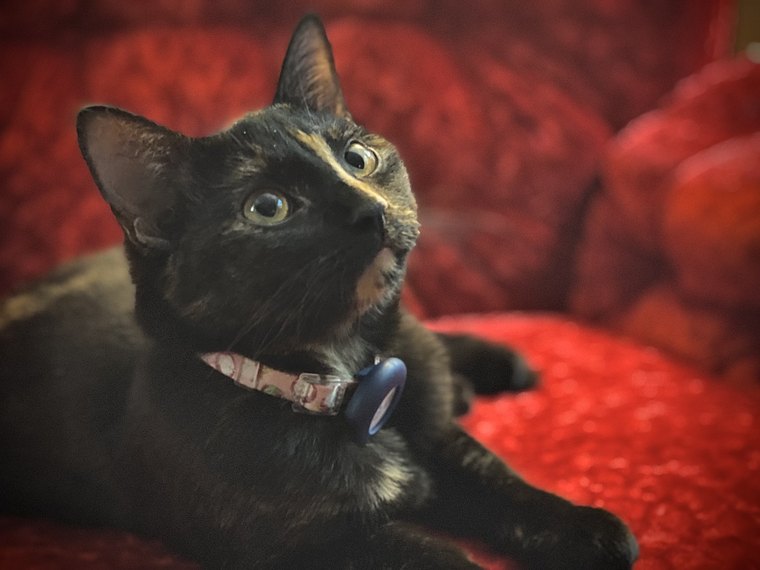
Two ordinary records support one inference. On the back of a photo of her cat,
in her handwriting: Mittens <3. In an old sent message to
her son, warm and specific, she mentions an attached file called
BABY_1990.JPG.
Nothing in the game labels either one as a password hint. Nothing sends you to fetch them. You just need a password, and a person’s cat is the sort of place a password comes from.
Read far enough into her mail to find those, and you also read the distance between a lively older message and the shorter, less certain notes written years later. That isn’t a twist, and it isn’t a puzzle to solve. It’s the private record of a whole person changing over time, encountered in the course of otherwise ordinary work.
The shop’s password cracker, installed off a floppy — the machine is the customer’s, so your tools have to come from somewhere. You type in what you noticed about the owner, and it grinds through combinations of it.
This is the real thing, ported to the page: the same clue combinations, tested against the same lock. It runs against Carl’s mother’s Private Files folder. Feed it what you’d have found on her machine.
Fake the pacing, never fake the outcome. When your clues can produce the password, the cracker rigs the winning guess to land about three-quarters of the way through the bar, because that feels tense. When they can’t, it genuinely fails. We’ll lie about drama. We will never lie about whether you were right.
A late-90s consumer OS. Boxy grey panels, hard 1px borders, a navy title bar, a teal desktop. Not a parody — it should feel like a real machine that a real, slightly disorganised person actually used. The interface is cold and the contents are warm.
- Clues are inferred, not fetched
- Nothing tells you to look at the cat photo. The test: would the player feel clever, or feel obedient? A clue you’re sent to collect is a fetch quest. A clue you notice is the game.
- Clues live where you have an honest reason to be
- Nothing is hidden behind a secret door. Things are where they’d actually be — in a photo, an email, a sticky note. The fiction does the hiding, because real people’s lives are disorganised.
- Fake the pacing, never fake the outcome
- We may lie about drama. We may never lie about whether you were right. The moment the game fakes a win, every later win is worthless.
- The player is competent
- You’re good at this job. The tools aren’t quirky or broken for comedy. The unease comes from what you find, not from fighting the interface.
Mystery95 is being made by Case Sensitive Games — three people — in Godot 4.7, on the GL Compatibility renderer, so it’ll run on roughly the sort of machine the game is about.
Where it’s up to: the first case is playable start to finish. Carl’s voicemail plays, his mother’s computer boots, the folder is genuinely locked, and the five photographs he asked for really do come off it. Everything after that is still an argument we’re having.
There’s nothing to download yet. When there is, it’ll be here.
Screenshots on this page are rendered from the running game by its own capture script, so they can’t drift from what it actually looks like. Handwriting is Caveat, under the SIL Open Font License.